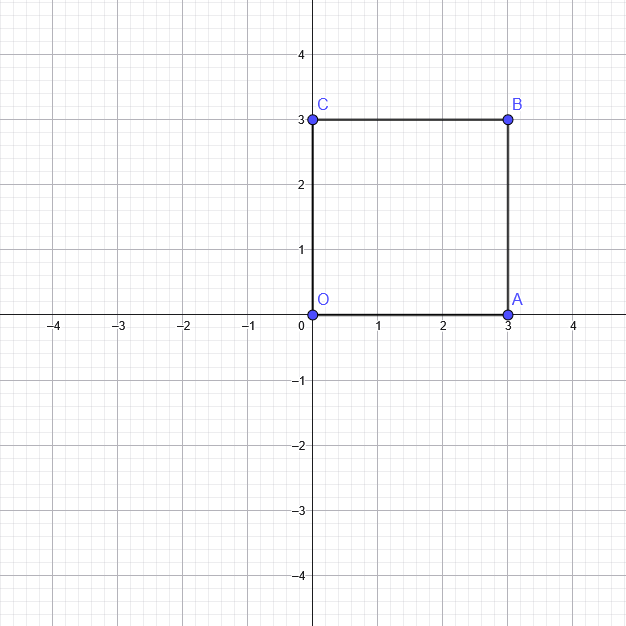
1. On a graph paper plot the points A (3, 0), B (3, 3), C (0, 3). Join A, B and B, C. What is the figure formed?
Solution:
Joining the points A, B and C we get a square ABCD.
2. Write the equation of the line parallel to the Y-axis at a distance of 7 units from it to its left.
Solution:
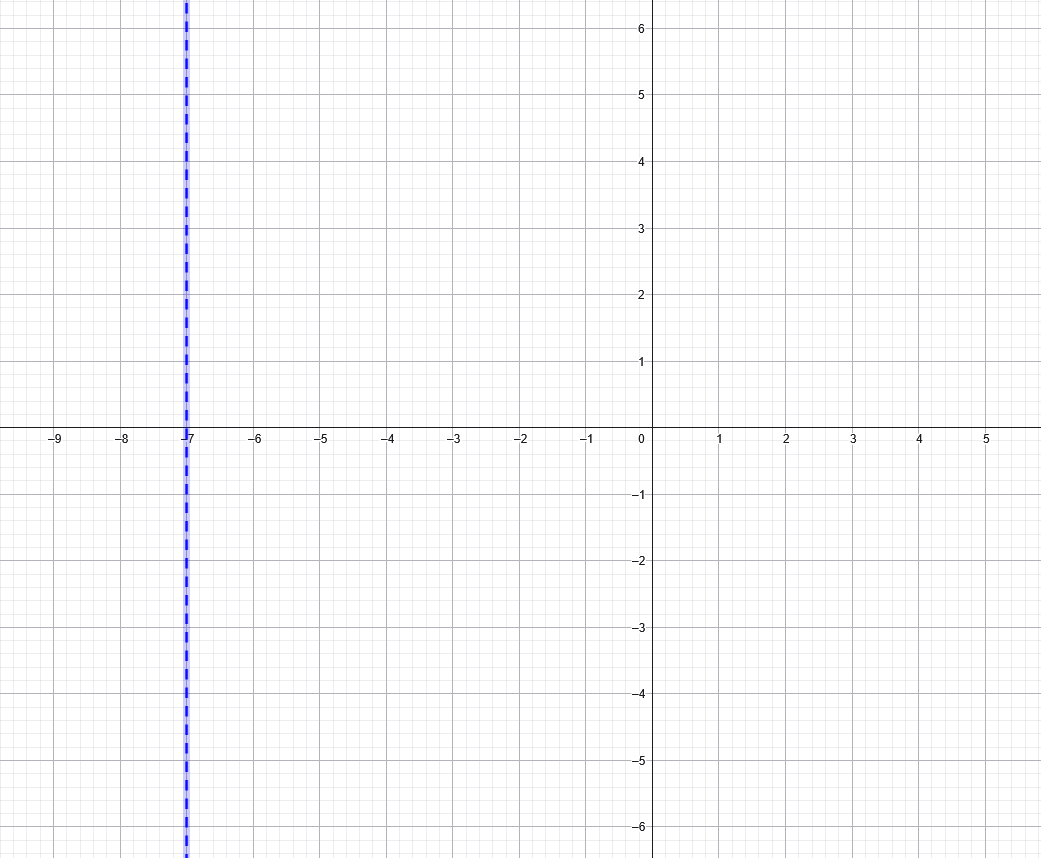
The equation of the line parallel to the Y-axis at a distance of 7 units from it to its left is x = − 7.
3. Write the equation of the line parallel to the X-axis at a distance of 5 units from it and below the X-axis.
Solution:
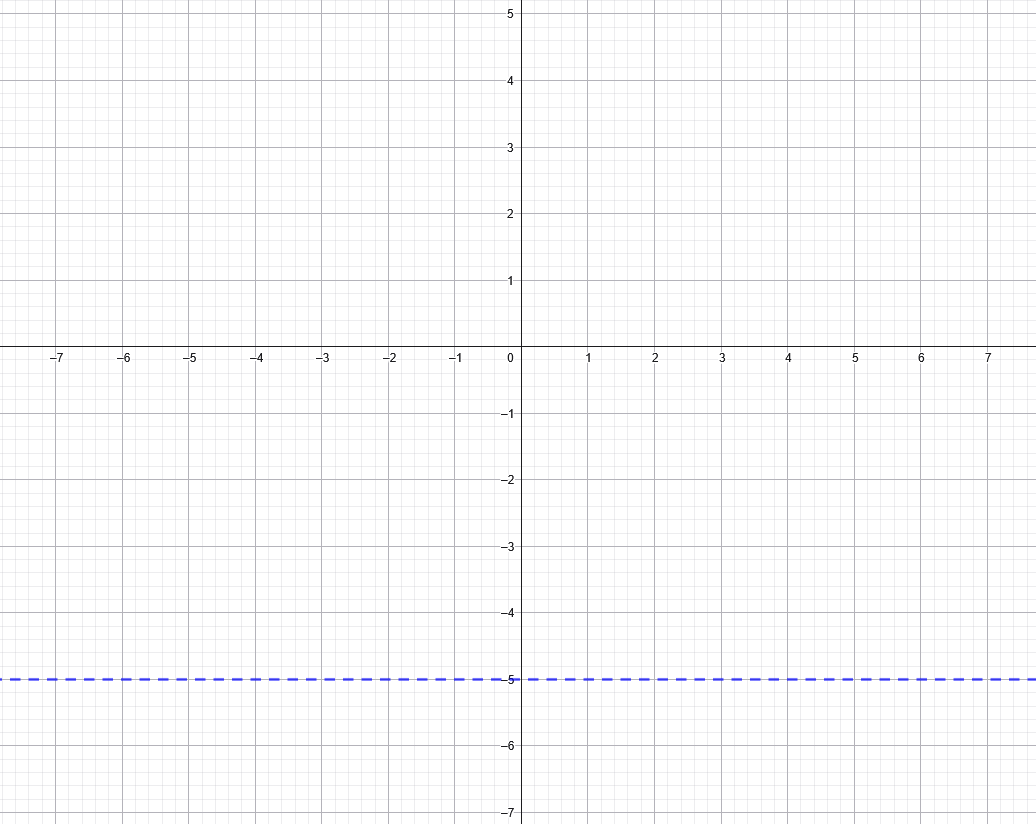
The equation of the line parallel to the X-axis at a distance of 5 units from it and below the X-axis is y = − 5.
4. The point Q(− 3, − 2) lies on a line parallel to the Y-axis. Write the equation of the line and draw its graph.
Solution:
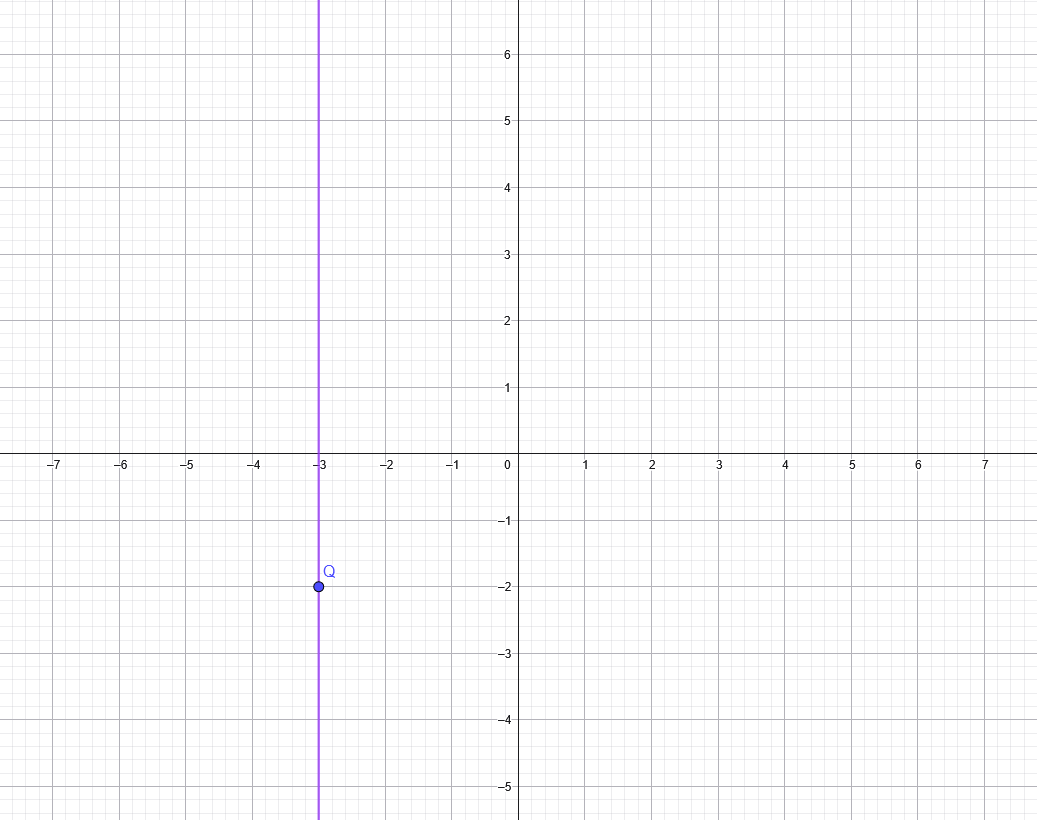
The equation of the line parallel to the Y-axis passing through the point Q(− 3, − 2) is x = − 3.
5. X-axis and line y = − 4 are parallel lines. What is the distance between them?
Solution:
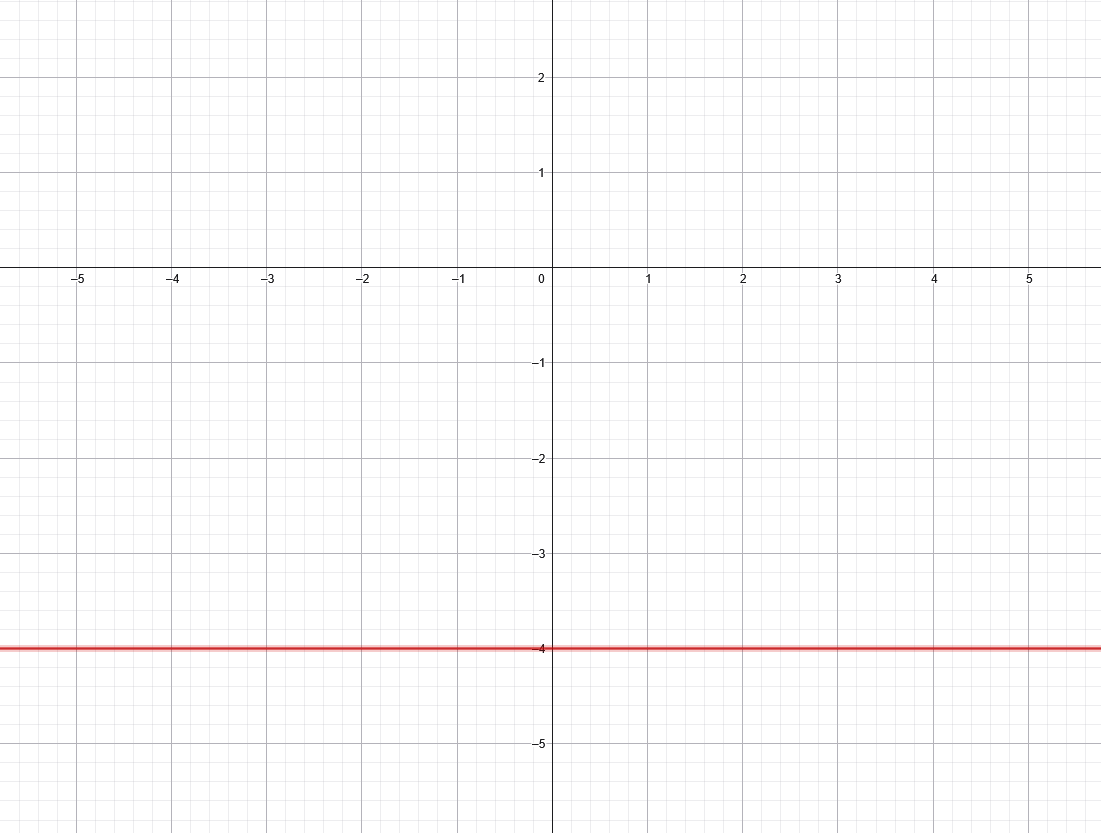
The distance between the X-axis and the line y = − 4 is 4 units.
6. Which of the equations given below have graphs parallel to the X-axis, and which ones have graphs parallel to the Y-axis?
Solution:
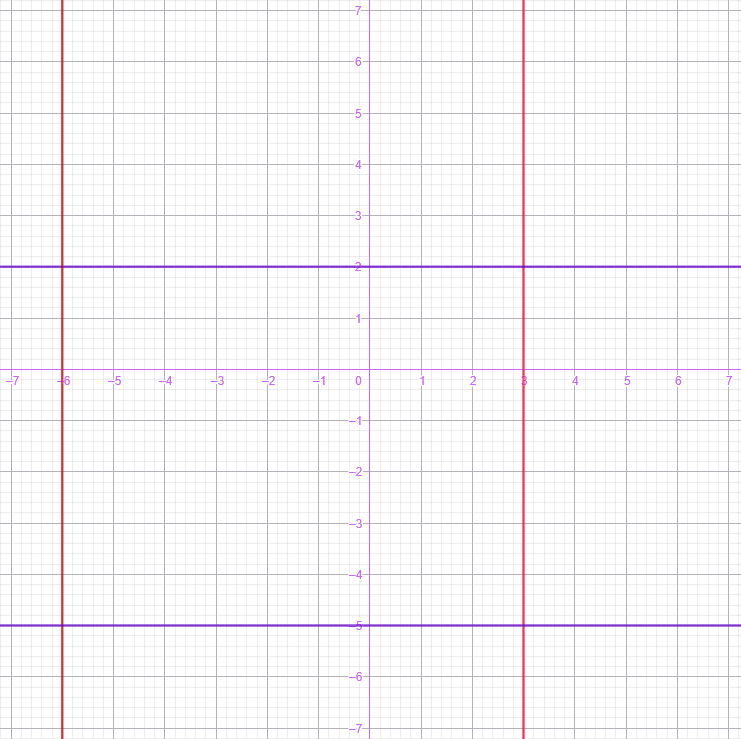
The equation of a line parallel to the X-axis is in the form y = b.
The equation of a line parallel to the Y-axis is in the form x = a.
- x = 3
→ Parallel to the Y-axis - y − 2 = 0
∴ y = 2
→ Parallel to the X-axis - x + 6 = 0
∴ x = − 6
→ Parallel to the Y-axis - y = − 5
→ Parallel to the X-axis
7. On a graph paper, plot the points A (2, 3), B (6, − 1) and C (0, 5). If those points are collinear then draw the line which includes them. Write the co-ordinates of the points at which the line intersects the X-axis and the Y-axis.
Solution:
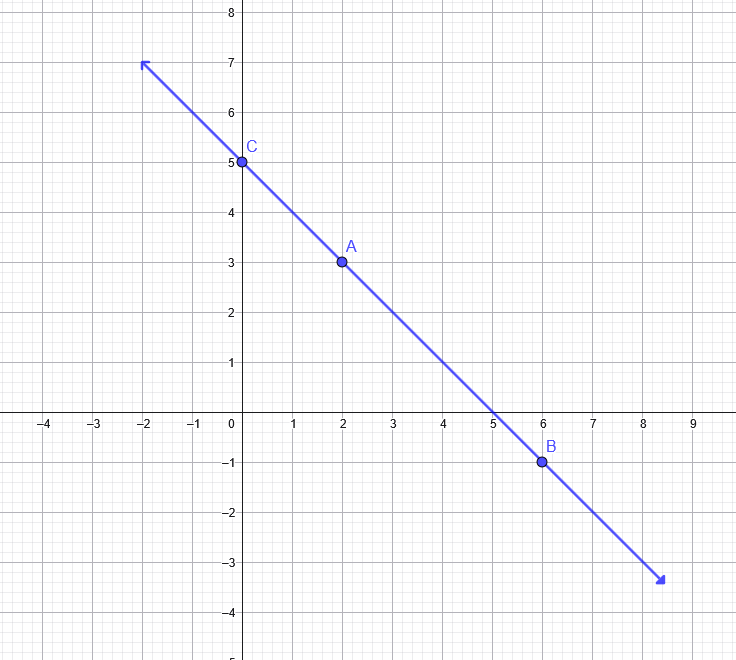
The line intersects the X-axis in the point (5, 0).
The line intersects the Y-axis in the point (0, 5).
8. Draw the graphs of the following equations on the same system of co-ordinates. Write the co-ordinates of their points of intersection.
- x + 4 = 0
- y − 1 = 0
- 2x + 3 = 0
- 3y − 15 = 0
Solution:
- x + 4 = 0
∴ x = − 4 - y − 1 = 0
∴ y = 1 - 2x + 3 = 0
∴ 2x = − 3
∴ x = − \(\frac{3}{2}\) - 3y − 15 = 0
∴ 3y = 15
∴ y = \(\frac{15}{3}\)
∴ y = 5
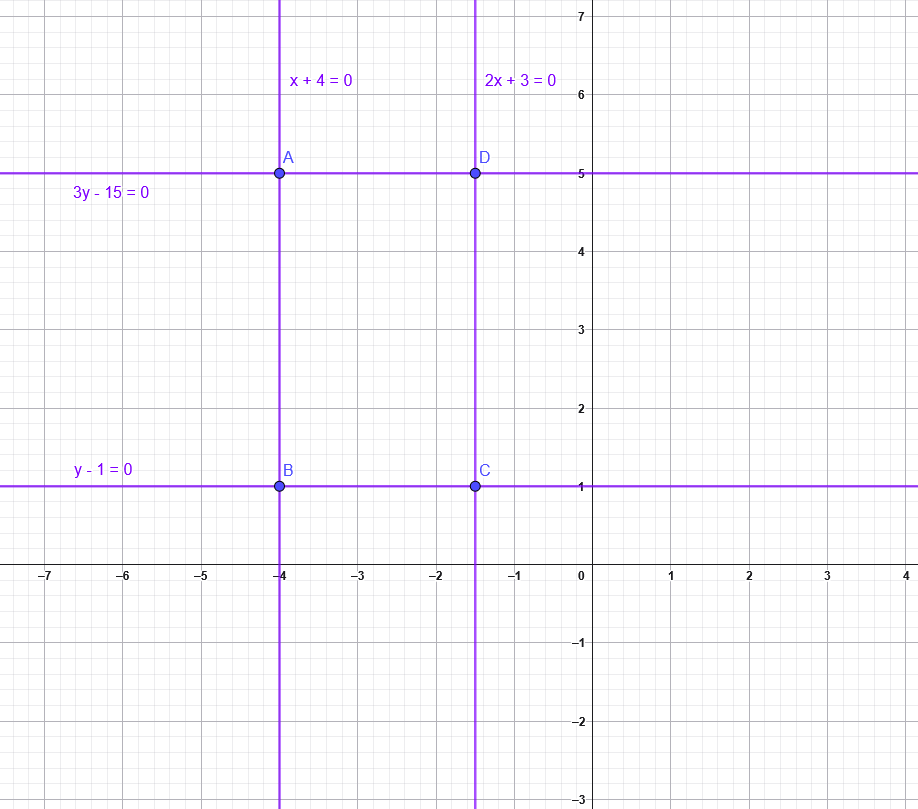
The co-ordinates of the points of intersection of these lines are: (− 4, 5), (− 1.5, 5), (− 1.5, 1) and (− 4, 1).
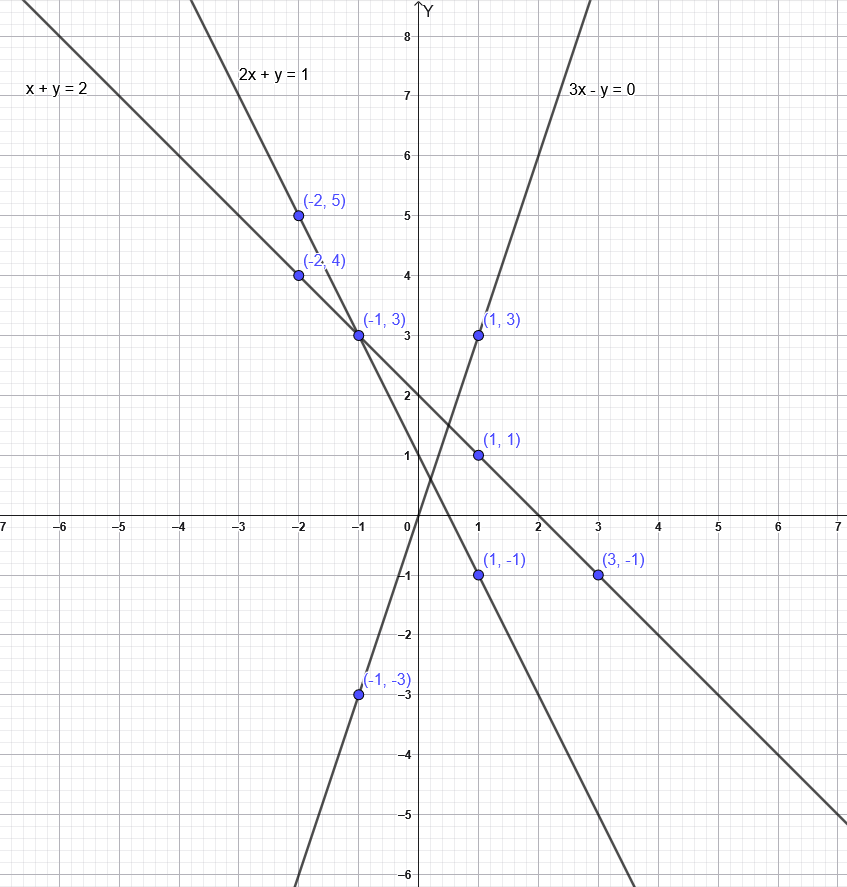
9. Draw the graphs of the equations given below:
- x + y = 2
- 3x − y = 0
- 2x + y = 1
Solution:
(i) x + y = 2∴ y = 2 − x
Now, prepare a table as shown below:
| x | 1 | − 2 | 3 |
|---|---|---|---|
| y | 1 | 4 | − 1 |
| (x, y) | (1, 1) | (− 2, 4) | (3, − 1) |
(ii) 3x − y = 0
∴ 3x = y
i.e. y = 3x
Now, prepare a table as shown below:
| x | 1 | − 1 | 0 |
|---|---|---|---|
| y | 3 | − 3 | 0 |
| (x, y) | (1, 3) | (− 1, − 3) | (0, 0) |
(iii) 2x + y = 1
∴ y = 1 − 2x
Now, prepare a table as shown below:
| x | 1 | − 1 | − 2 |
|---|---|---|---|
| y | − 1 | 3 | 5 |
| (x, y) | (1, − 1) | (− 1, 3) | (− 2, 5) |
This page was last modified on
17 March 2026 at 08:26